

After receiving satisfactory replies to all enquiries, as well as the mortgage offer (which can also take 3-4 weeks), the buyer’s solicitor prepares a report for their client. This report summarises in plain language the terms of the contract, the replies to the enquiries, as well as the contents of the title deeds and the research results. Together with the report they also send copies of all documents that have been reviewed and are referred to in the report. The buyers then decide, based on the report, and if they don’t have any further queries, whether they still want to buy the property. The buyers will also at this stage be sent all documents which need signing in case they would like to proceed with their purchase – the contract, the mortgage deed, the transfer deed (if applicable) and other documents if any government scheme is being utilised or if the property is leasehold. The buyers then would sign these and send them back to the solicitor together with the 10% deposit in readiness to exchange contracts next. This usually takes a few days.
Here is how the documents which need signing look:
Contract
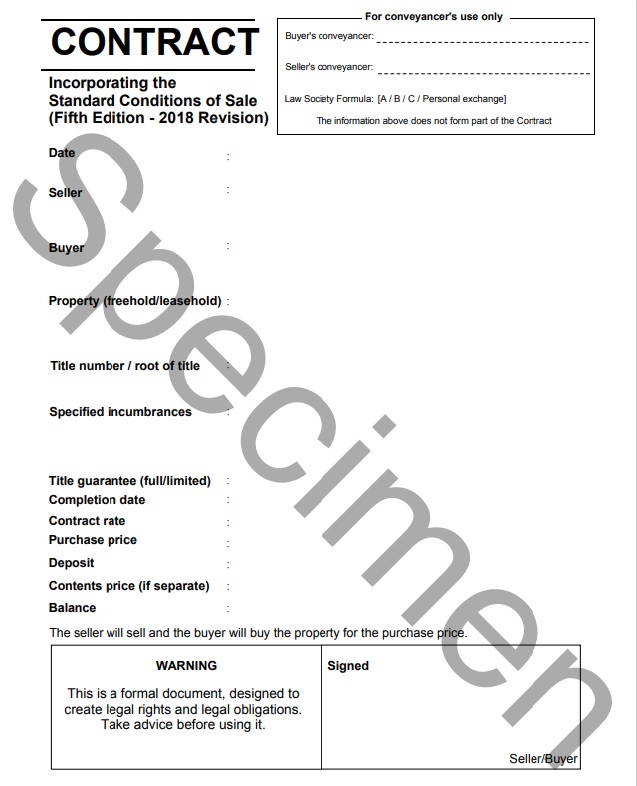 Copyright in this form and its contents rests jointly in Oyez Professional Services and The Law Society. Source: The Law Society
This is how the first page of a standard contract looks. The names and addresses of the buyer and the seller would already been written in as well as the address of the property and its title number. Under specified incumbrances, they will have referred to the title and put the date and the time it was issued.
Title guarantee refers to the guarantee the seller can provide for the property and its documents and it is usually full title guarantee. If the seller is an executor they would not have lived at the property and would have limited knowledge of it so therefore would be able to give either limited guarantee or no guarantee.
At the bottom of the page there is space to insert the price (if it is not there already), the amount of the deposit available (which can be less than the usual 10%),
Upon exchange of contracts, the solicitors would insert the completion date which would have been agreed in advance and would date the contract inserting also the time they spoke on the phone to “exchange” the contracts. The contract can be signed by any of the buyers on behalf of all of them or by their solicitor.
The price, the deposit (usually 10%), any allowances and deductions are written down at the end of the page.
It is usually two pages with the Fittings and Contents Form completed by the seller enclosed. The second page contains all special conditions.
The contract, even when exchanged, is not proof of ownership which some schools require before offering a place to your children. The contract on its own does not guarantee the completion of the purchase.
Mortgage deed
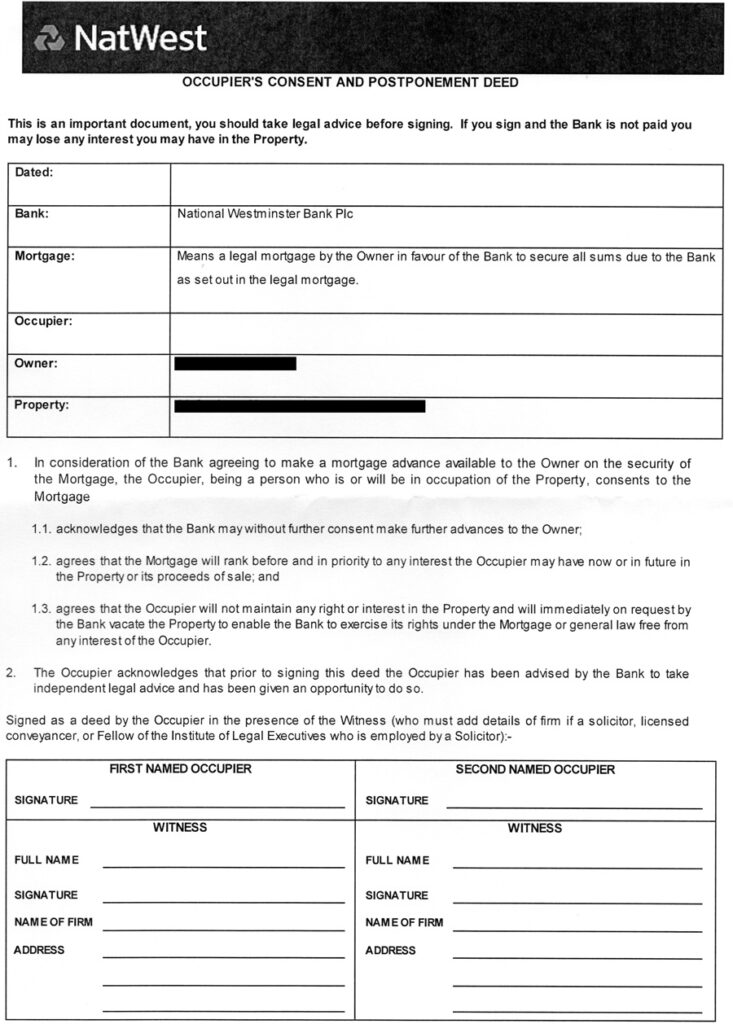
This is an example of a mortgage deed from National Westminster Bank.
They are usually one or two pages and contain the buyers’ names, any occupiers’ names (people over 18 who will live at the property but are not party to the mortgage), the address of the property and the date of completion.
Same as the contract, the mortgage deed needs to be signed in advance and sent back to your solicitor undated. They will date it on the day of completion when they receive the mortgage funds.
As this document is a deed, it needs to be signed in the presence of a witness (could be the same for all buyers) who should also sign where indicated and state their name and address (and occupation, if required). The witness confirms that the buyer signs the document himself in front of them.
SDLT return
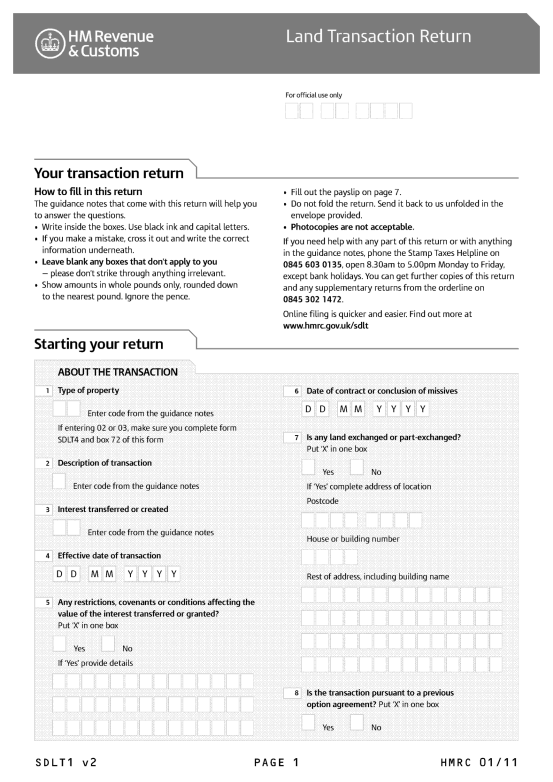
This is the first page of form SDLT1 which needs to be completed upon each purchase of a property and submitted to HMRC within 14 days of completion of the purchase before a late filing penalty is imposed. Any tax due needs to be paid also within 14 days of completion otherwise interest will start accruing on the amount.
Its length and complexity will depend on the type of property being purchased as well as the buyer’s circumstances. The names of all buyers, sellers, their lawyers, and details of the land or property purchased are required in all submissions. The form allows for any tax relief you can utilise to be taken into consideration such as first-time buyer tax relief.
Regardless of whether there is any tax due to be paid, the forms needs to be submitted to HMRC. The only exceptions are transfers of property for no money, under a will or following a divorce.
Transfer deed
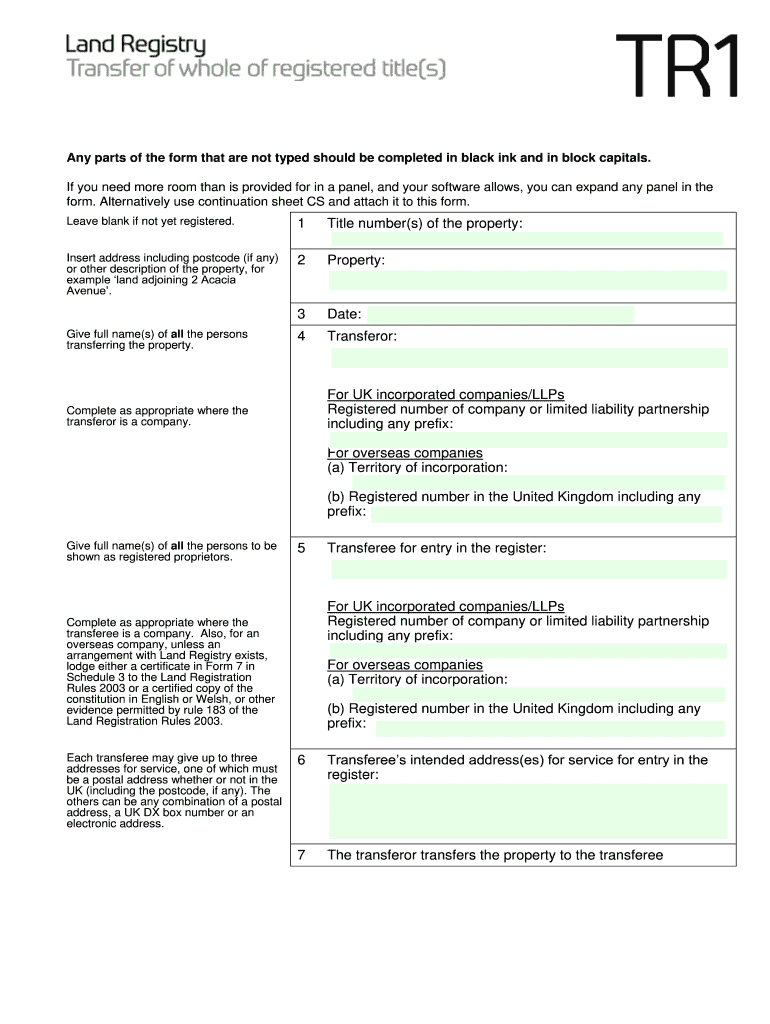
The transfer form is also a deed and needs to be signed in the presence of a witness.
This is the document which effects the change of ownership from the seller to the buyer and is sent for registration at the Land Registry by the buyer’s solicitors after completion.
It is usually five or 6 pages and includes information about the property, the buyers and the sellers, how the buyers are to hold the property jointly (if more than one), the price and any other conditions which need to be registered on the title.
The transfer deed needs to be signed in advance and sent to the solicitors who will date it on completion.